
There is a day between the cross and the empty tomb that we rarely talk about.
Not the triumph of Palm Sunday. Not the intimacy of Holy Thursday. Not even the agony of Good Friday. Just this: a sealed stone, a silent grave, and the disciples hiding behind locked doors, not yet knowing that everything was about to change.
Holy Saturday, April 4, 2026, is the most theologically mysterious day of the year. Nothing happens — and everything is happening. The world holds its breath. And in the darkness, God is at work.
What Is Holy Saturday?
Holy Saturday is the third and final day of the Sacred Triduum, the three holiest days of the Catholic year. It falls between Good Friday — the day of the crucifixion — and Easter Sunday — the day of the Resurrection.
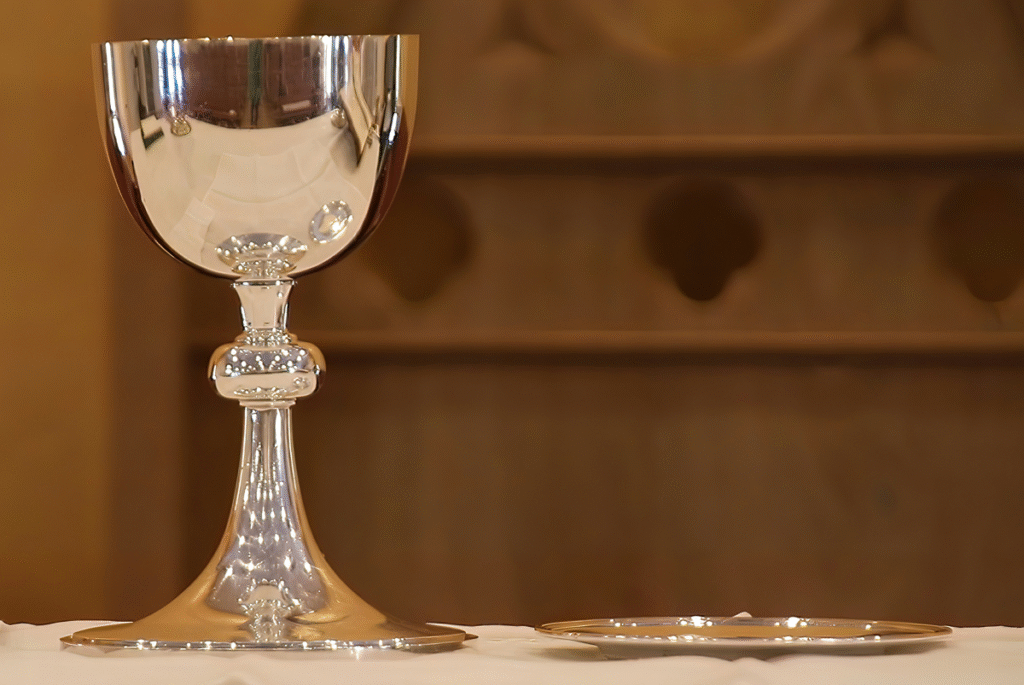
On Holy Saturday, the Church observes a unique liturgical silence. There is no Mass during the day. The tabernacle is empty. The altars remain stripped bare from Good Friday. The Blessed Sacrament is not distributed. The church is, in every visible sense, a place of absence.
This absence is intentional. It is the Church’s way of entering into the experience of the disciples on that first Holy Saturday — the experience of loss, confusion, and waiting without knowing what they were waiting for.
The day culminates in the Easter Vigil — the greatest and most ancient liturgy of the entire Church year — which begins after nightfall and leads the faithful from darkness into the blazing light of the Resurrection.
The Theology of Holy Saturday: What Was Happening in the Tomb
To the disciples, Holy Saturday was a day of devastation. Their teacher was dead. Their hopes were buried with Him. The one they had believed was the Messiah had been executed as a criminal.
But the Church has always believed that something extraordinary was happening precisely in that silence.
The Descent Into Hell
The Apostles’ Creed professes that after His death, Jesus “descended into hell.” This is not the hell of eternal damnation — it is Sheol in Hebrew, Hades in Greek — the realm of the dead, the place where all souls went before the Resurrection opened the gates of heaven.
Jesus descended there not as a prisoner, but as a conqueror.
The ancient homily for Holy Saturday — one of the most beautiful texts in all of Christian literature — imagines Christ entering the realm of the dead and waking Adam and Eve:
“I am your God, who for your sake have become your son. I, who am above the heavens, descend to the earth — and beneath the earth. I, who am above the Sabbath, rest on this Sabbath. I restore life to the dead.”
Holy Saturday is not a day of emptiness. It is the day Jesus was busy with the dead — liberating the souls of the just who had been waiting since the beginning of time for the gates of heaven to open.
The Silence of God
Yet for those who stood outside the tomb, there was only silence.
This is a silence many of us know in our own lives — the silence after a devastating loss, the silence when our prayers seem to go unanswered, the silence when God feels absent and the stone feels very heavy and very permanent.
Holy Saturday gives us permission to sit in that silence without pretending it is not hard. The disciples did not know Sunday was coming. They only knew Friday had happened.
And still — Sunday was coming.
The silence of Holy Saturday is not the silence of abandonment. It is the silence of God working in ways we cannot see, in places we cannot reach, on a timeline we did not choose. It is the silence before the most important word ever spoken: “He has risen.”
Mary on Holy Saturday
Of all the figures of Holy Saturday, it is Mary who stands at the center.
The disciples had fled. Peter had denied Jesus three times. Even John, who had stood at the foot of the cross, was now in hiding. Only Mary remained — not with answers, not with certainty, but with faith.
The Church has always believed that Mary alone, on that first Holy Saturday, held unshaken faith in the Resurrection. She did not yet see it. She did not yet understand it. But she trusted the One who had told her, thirty-three years earlier: “Nothing is impossible with God.”
This is why Holy Saturday is, in a quiet way, a Marian day. Mary shows us how to wait — not passively, not in despair, but in the active, costly, loving faith that holds on when everything visible has collapsed.
If you are living your own Holy Saturday — a season of waiting, of unanswered prayer, of apparent absence — Mary is your companion. She has been there. She knows this silence. And she knows what comes after it.
How to Live Holy Saturday
Holy Saturday is a day apart. It asks something different from us than any other day of the year.
Keep the Fast
Many Catholics extend the Good Friday fast through Holy Saturday — eating lightly or not at all until the Easter Vigil. This is not required, but it is a powerful way to honor the silence of the day and to let your body share in the waiting.
Pray in Silence
There are no major liturgies during the day. Use this time for quiet, unhurried prayer — the kind that is hard to find during the rest of the year. Sit before a crucifix. Read the Passion narrative one more time. Simply be still.
Prepare for the Easter Vigil
The Easter Vigil begins after nightfall — usually between 8:00 and 9:00 PM. Prepare for it as you would prepare for the most important event of the year, because it is. Arrive early. Bring a candle. Come ready to be changed.
Do Something Beautiful for Easter
In the quieter hours of Holy Saturday, prepare your home for Easter — arrange flowers, prepare the Easter meal, set out the Easter candle. These simple acts of preparation are themselves a form of faith: acting as though Sunday is coming, even before it arrives.
Pray for Those Being Baptized Tonight
At the Easter Vigil, men and women around the world will be baptized and received into the Catholic Church. Pray for them today — for their courage, their joy, and their new life in Christ.
The Easter Vigil: The Night That Changes Everything
The Easter Vigil is the oldest and greatest liturgy of the entire Catholic year. It has been celebrated, in various forms, since the earliest centuries of Christianity. Saint Augustine called it “the mother of all holy vigils.”
It begins in complete darkness — outside the church, around a fire.
The Service of Light
A fire is lit outside the church. From it, the Easter Candle — the Paschal Candle — is lit and carried into the dark church by the deacon, who sings three times: “The Light of Christ.” And the congregation responds: “Thanks be to God.”
From the Paschal Candle, the flame is passed from candle to candle until the entire church is filled with light. It is one of the most beautiful images in all of Christian worship: a single flame, shared, multiplying, filling the darkness.
The deacon then sings the Exsultet — the great Easter proclamation, one of the most ancient hymns of the Church — announcing the Resurrection to heaven, earth, and the Church assembled:
“Rejoice, heavenly powers! Sing, choirs of angels! Exult, all creation around God’s throne! Jesus Christ, our King, is risen!”
The Liturgy of the Word
The Easter Vigil includes the longest Liturgy of the Word of the entire year — seven Old Testament readings, a psalm, an Epistle, and the Gospel. Together they tell the entire story of salvation, from the creation of the world to the empty tomb.
This is not meant to be rushed. It is meant to be savored — the great story of God’s love for humanity, read in the dark, by candlelight, on the night of the Resurrection.
The Baptisms
The climax of the Easter Vigil — before the Mass itself — is the celebration of Baptism. Those who have been preparing throughout Lent in the Rite of Christian Initiation of Adults are baptized, confirmed, and receive their first Communion.
The entire congregation renews their own baptismal promises alongside them.
This is the Church at her most joyful — welcoming new members into the Body of Christ on the night He rose from the dead.
The First Mass of Easter
After the baptisms, the Easter Vigil concludes with the first Mass of Easter. The bells ring. The Gloria is sung. The Alleluia — silent throughout all of Lent — is proclaimed again for the first time.
He is risen. He is truly risen.
Prayer for Holy Saturday
In the name of the Father, and of the Son, and of the Holy Spirit. Amen.
Lord Jesus, today the tomb is sealed. Today the world is silent. Today I sit with Your disciples in the locked room of my own uncertainty — not yet seeing, not yet understanding, but choosing to stay.
I know what Friday held. I have stood at the cross. I have seen the stone rolled shut. I have felt the weight of endings and the silence that comes after.
And I confess, Lord — there are places in my own life that feel like this sealed tomb. Prayers that seem unanswered. Wounds that have not healed. Hopes that were buried and have not yet risen.
Today I bring them here. I lay them at the entrance of this tomb. And I wait.
Teach me to wait like Mary. Not with false certainty — pretending I already know the ending. Not with despair — as though Friday were the final word. But with the faith that holds on when it cannot yet see, that trusts when it cannot yet understand, that stays when everything visible gives reason to leave.
Lord, I believe You are at work in every silence I cannot interpret, in every darkness I cannot illuminate, in every tomb I have sealed and walked away from.
I believe You descended into the deepest darkness so that no darkness could ever again be without Your presence.
I believe that where I am waiting, You have already been. And where You have been, death does not have the last word.
Tonight the fire will be lit. Tonight the darkness will break. Tonight the Alleluia will return.
But for now — this holy, costly, sacred now — I wait with You in the silence of the tomb.
Come, Lord Jesus. Come quickly.
In the name of the Father, and of the Son, and of the Holy Spirit. Amen.
Frequently Asked Questions About Holy Saturday
There is no Mass during the day on Holy Saturday. The only liturgy is the Easter Vigil, which begins after nightfall. During the day, the Church observes a unique liturgical silence — no sacraments are celebrated and the tabernacle remains empty.
The Easter Vigil must begin after nightfall. Most parishes begin between 8:00 PM and 9:00 PM on Holy Saturday. Check with your local parish for the exact time.
Yes. There is no required fasting or abstinence on Holy Saturday. However, many Catholics choose to extend the Good Friday fast through Holy Saturday as a personal devotion.
It refers to Christ’s descent into Sheol — the realm of the dead — after His death on the cross. Catholic theology teaches that Jesus descended there not as a prisoner, but to liberate the souls of the just who had been waiting since the beginning of time for the gates of heaven to open.
The Exsultet is the great Easter proclamation sung by the deacon at the beginning of the Easter Vigil. It is one of the oldest hymns of the Church, announcing the Resurrection to all of creation. It is sung only once a year — at the Easter Vigil.
Every Catholic is encouraged to attend the Easter Vigil — it is the most important liturgy of the year. It is especially meaningful for those who have family members or friends being baptized or received into the Church at this celebration.
Related Prayers and Resources
- ⭐ Good Friday 2026 — The day that made Holy Saturday necessary
- ⭐ Easter Sunday Prayer 2026 — Celebrate the Resurrection after the silence of the tomb
- ⭐ Divine Mercy Novena — Begin on Good Friday, conclude on Divine Mercy Sunday
- ⭐ Stations of the Cross Prayer — Walk the Way of the Cross with Christ
- ⭐ Holy Week 2026 Complete Guide — Every day of Holy Week explained
Save this reflection for Holy Saturday / Share it with your family