As Lent approaches, many Catholics have practical questions about fasting and abstinence. What counts as a full meal? Can I drink coffee? Is fish allowed? Understanding these rules helps us observe Lent faithfully without unnecessary confusion.
This guide explains the Catholic Church’s fasting and abstinence requirements for Lent 2026, answers common questions, and offers guidance on how to approach these disciplines with the right spirit.
Updated for Lent 2026. Below you will find the official Catholic fasting rules for Lent 2026, including who must fast, who is exempt, and what is permitted on fasting and abstinence days.
What Are Fasting and Abstinence?
The Church distinguishes between two forms of penance during Lent:
Fasting
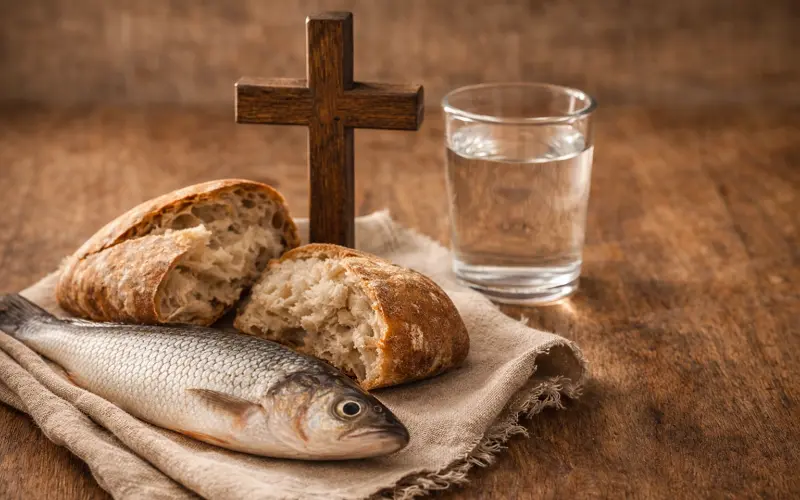
Fasting means limiting the amount of food consumed. On days of fasting, Catholics are permitted:
- One full meal
- Two smaller meals that together do not equal the quantity of a full meal
- No eating between meals (liquids are allowed)
Abstinence
Abstinence means refraining from eating meat. This includes beef, pork, chicken, and other land animals. Fish and seafood are permitted.
What Are the Catholic Fasting Rules for Lent 2026?
Ash Wednesday (February 18, 2026)
- Fasting: Required for Catholics ages 18–59
- Abstinence: Required for Catholics ages 14 and older
All Fridays During Lent
- Abstinence from meat: Required for Catholics ages 14 and older
- Fasting is not required on Fridays of Lent, except on Good Friday.
Good Friday (April 3, 2026)
- Fasting: Required for Catholics ages 18–59
- Abstinence: Required for Catholics ages 14 and older
Summary: Only two days require both fasting and abstinence—Ash Wednesday and Good Friday. These are the most solemn penitential days of Lent.
Who Is Required to Fast During Lent 2026?
Catholic fasting is required for adults ages 18 through 59 on Ash Wednesday and Good Friday. Abstinence from meat is required for Catholics age 14 and older on Ash Wednesday, Good Friday, and all Fridays of Lent.
Common Questions About Lenten Fasting
On Ash Wednesday and Good Friday, Catholics ages 18–59 must fast (one full meal and two smaller meals). Catholics age 14 and older must abstain from meat on Ash Wednesday, Good Friday, and all Fridays during Lent 2026.
A full meal is a normal-sized meal that you would typically eat for lunch or dinner. There is no specific calorie count, but it should be a reasonable portion that sustains you.
The two smaller meals combined should not equal the quantity of your full meal. The purpose is genuine sacrifice, not finding loopholes.
Yes. Liquids do not break the fast. You may drink water, coffee, tea, juice, milk, and other beverages throughout the day.
However, thick smoothies, protein shakes, or meal replacement drinks are considered food and should be counted as part of your meals.
Yes. Fasting limits the amount of food, not the type of food. You may eat eggs, cheese, milk, yogurt, fish, seafood, vegetables, grains, and all other foods—just in the quantities prescribed (one full meal and two smaller meals).
On days of abstinence (Ash Wednesday, Good Friday, and all Fridays of Lent), you must avoid meat from mammals and birds, but fish, eggs, and dairy are allowed.
This is a matter of some debate among theologians. The safest approach is to avoid chicken broth, beef broth, and foods flavored with meat products on days of abstinence.
However, if meat is used only as a minor seasoning (such as a small amount of bacon grease in beans), many consider this acceptable. When in doubt, choose the stricter interpretation or consult your priest.
Yes. The following are exempt from fasting and abstinence:
– Those who are ill or have health conditions that make fasting dangerous
– Pregnant or nursing mothers
– Those performing heavy physical labor
– Children under age 14 (abstinence) and under age 18 or over age 59 (fasting)
– Those with eating disorders or other conditions that make fasting harmful
If you are exempt from fasting, you are encouraged to offer another form of sacrifice or penance, such as extra prayer, almsgiving, or giving up something else.
If you genuinely forgot it was Friday or accidentally consumed meat without realizing it, it is not a sin. Sin requires knowledge and deliberate choice.
However, if you remember mid-meal, stop eating the meat. Offer a prayer of contrition and resolve to be more careful. There is no need to confess an honest mistake.
Sundays are not counted in the 40 days of Lent, so technically, you are not required to keep your Lenten sacrifice on Sundays.
However, many Catholics choose to maintain their sacrifice throughout the entire season as a sign of devotion and consistency. This is a personal decision—both approaches are acceptable.
The Church understands that special circumstances arise. If you are attending a wedding, celebration, or traveling where fasting is impractical, do the best you can.
You might:
– Eat smaller portions than usual
– Abstain from meat even if not fasting fully
– Offer an extra prayer or act of charity that day
God sees your heart and your effort. Lent is not about rigid legalism, but about turning toward God with sincerity.
Why Do Catholics Fast During Lent?
Fasting is not punishment or an arbitrary rule. It is a spiritual discipline with deep meaning:
1. Fasting Teaches Self-Control
By denying ourselves food—something we crave daily—we learn that we are not slaves to our appetites. We practice saying “no” to immediate gratification, which strengthens us to resist sin.
2. Fasting Reminds Us That God Alone Satisfies
When we feel hunger, we are reminded that earthly bread does not ultimately satisfy. As Jesus said, “Man shall not live by bread alone, but by every word that comes from the mouth of God” (Matthew 4:4).
3. Fasting Is an Act of Solidarity
Millions of people in the world experience hunger not by choice, but by necessity. When we fast, we share—even in a small way—in the suffering of the poor and are moved to greater compassion and generosity.
4. Fasting Unites Us with Christ
Jesus fasted for 40 days in the desert before beginning His ministry. When we fast during Lent, we walk with Him through the wilderness, preparing our hearts for Easter.
Beyond the Rules: The Spirit of Lenten Fasting
While it is important to understand and follow the Church’s fasting rules, Lent is not about legalism. It is about conversion of heart.
The Church sets a minimum standard—one that even those with busy lives can fulfill—but you are free to do more if you are able. Some Catholics choose to:
- Fast on additional days beyond Ash Wednesday and Good Friday
- Give up meat entirely for the 40 days
- Limit themselves to bread and water on certain days
- Fast from technology, entertainment, or other distractions
Whatever you choose, remember: The goal is not perfection, but a sincere desire to draw closer to God.
If you fail in your fasting, do not be discouraged. Ask God for forgiveness, and begin again the next day. His mercy is greater than our weakness.
Continue Your Lenten Journey
Deepen your Lent with these prayers and resources:
- Complete Guide to Lent 2026 – Prayers, fasting, and spiritual renewal
- What to Give Up for Lent 2026 – Ideas for meaningful sacrifices
- Ash Wednesday Prayer 2026 – Begin Lent with repentance and hope
- 40 Days of Lenten Prayers – Daily prayer calendar
- Stations of the Cross – Short Version – Perfect for Fridays
If this guide helped clarify Lenten fasting for you, share it with someone preparing for Lent. Sometimes the most faithful thing we can do is help others understand how to follow Christ with confidence and peace.