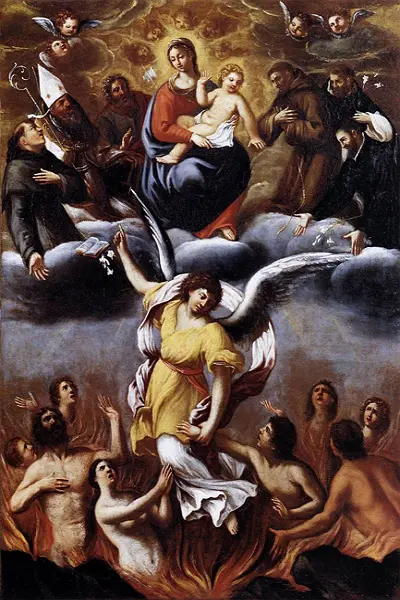

Lent is the Church’s great season of return. But before we can return, we need to see clearly where we’ve been. A Catholic examination of conscience is not about guilt — it’s about honesty before a God who already loves you and is waiting to forgive you. Take your time with this. Let it be a prayer, not a checklist.
What Is an Examination of Conscience?
The examination of conscience is an ancient Catholic practice of prayerfully reviewing your thoughts, words, and actions to recognize where you have fallen short of God’s love — and where you have failed to love others as He calls you to.
A good examination helps you recognize serious sins clearly so that you can confess them honestly and completely.
It is the essential first step before going to Confession. Without it, we tend to confess vaguely and leave unchanged. With it, we walk out of the confessional truly lighter. The Church encourages a brief daily examination of conscience, and during Lent it takes on special depth — especially before receiving the Sacrament of Reconciliation.
How to Begin: A Short Opening Prayer
Come, Holy Spirit, enlighten my mind and heart,
that I may see my sins clearly and recognize where I have failed to love as God calls me to love.
Grant me the grace of true sorrow and a firm purpose of amendment.
Help me to trust in the mercy of Christ and to approach the Sacrament of Reconciliation with humility and confidence.
Amen.
Examination of Conscience: Questions to Ask Yourself
The Church teaches that for a sin to be mortal, it must involve serious matter, full knowledge, and deliberate consent. This examination helps you recognize serious sins honestly — without fear or scrupulosity. Remember to consider your sins since your last good Confession.
In My Relationship with God
- Have I prayed daily, or do I go days without speaking to God?
- Have I attended Mass on Sundays and Holy Days of Obligation?
- Have I received Communion in a state of mortal sin?
- Have I used God’s name carelessly or in anger?
- Have I put other things before God — money, comfort, approval, screens?
- Have I doubted God’s goodness or refused to trust Him in difficult moments?
- Have I avoided the Sacrament of Confession out of fear or indifference?
In My Relationship with Others
- Have I been dishonest — in words, in business, in relationships?
- Have I hurt someone with my words and never apologized?
- Have I gossiped, judged, or spoken badly about someone behind their back?
- Have I held onto anger or refused to forgive someone who hurt me?
- Have I been selfish with my time, money, or attention?
- Have I failed to help someone I could have helped?
- Have I been patient with my family — or do I save my worst self for those I love most?
- Have I been unfair or taken advantage of someone?
In My Relationship with Myself
- Have I abused my body — through excess food, alcohol, substances, or neglect?
- Have I entertained impure thoughts or sought out content that harms my purity or weakens my relationship with God?
- Have I been ruled by pride — needing to be right, to win, to be admired?
- Have I been lazy about growing spiritually — skipping prayer, avoiding the sacraments?
- Have I been envious of others instead of grateful for what God has given me?
As a Parent, Spouse, or Family Member
- Have I modeled faith for my children, or left their spiritual formation to chance?
- Have I been present and attentive to my spouse, or distracted and distant?
- Have I honored my parents and cared for them if they needed me?
Practical Ways to Use This Examination
- Find a quiet place. Even 10 minutes of silence is enough.
- Begin with the opening prayer above. Don’t rush into the questions cold.
- Go slowly. If a question stops you, stay with it. That’s the Holy Spirit working.
- Write down what surfaces. A short note helps you remember when you’re in the confessional.
- Don’t be scrupulous. You’re not looking for every imperfection — you’re looking for patterns and serious sins.
- End with an Act of Contrition. Express sorrow before you even enter the confessional.
- Go to Confession. The examination without the sacrament is incomplete.
A Closing Prayer Before Confession
Lord Jesus,
I have looked honestly at my life,
and I am not proud of everything I see.
But I come to You
not because I am worthy —
I come because You are merciful.
Forgive me for the ways
I have failed You
and failed others.
I want to do better,
not out of fear,
but out of love.
Give me a contrite heart
and the grace to begin again.
Amen.
After reflecting on your life, you may find comfort in this prayer to Saint Mark the Evangelist