
There is no day in human history like this one.
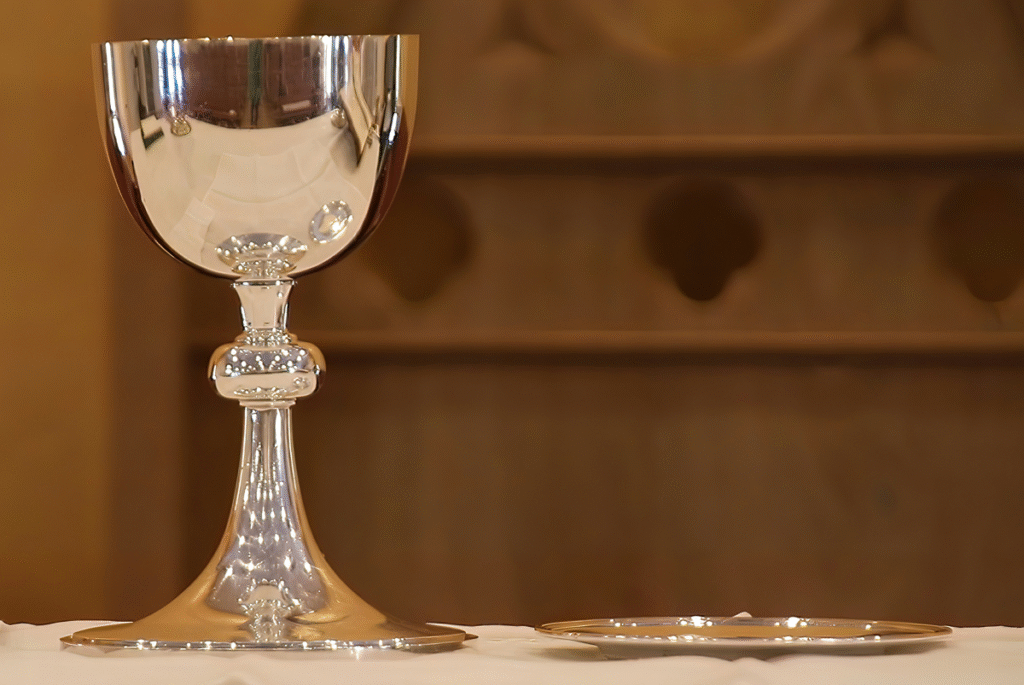
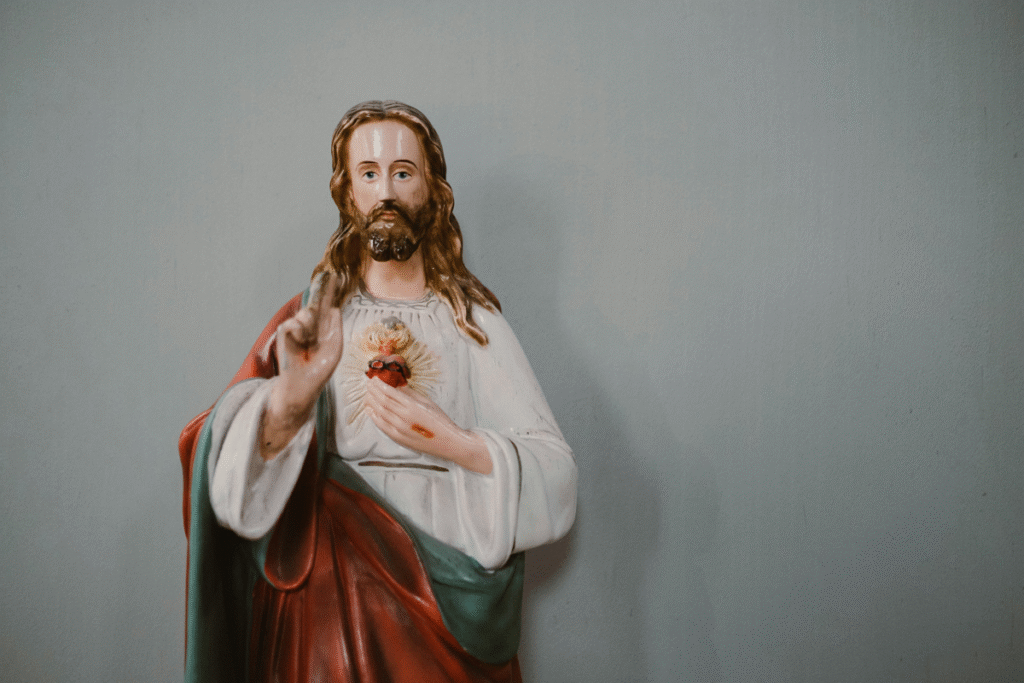
On Good Friday, April 3, 2026, the Church does not celebrate Mass. The altars are bare. The tabernacle is empty. The bells are silent. And in churches around the world, Catholics kneel before a wooden cross and kiss the feet of the One who died on it.
Good Friday is not a day of defeat. It is the day Love went all the way — further than we could have imagined, further than we deserved, further than death itself.
What Is Good Friday?
Good Friday is the second day of the Sacred Triduum — the three holiest days of the Catholic year. It commemorates the Passion, crucifixion, and death of Jesus Christ.
On this day, there is no Mass. The Eucharist is not celebrated — only distributed from hosts consecrated on Holy Thursday. The Church enters into a profound silence that will not be broken until the Easter Vigil cry: Christ is risen.
The name “Good Friday” may seem strange for a day of such suffering. Various explanations exist — some scholars believe “Good” is a corruption of “God’s Friday,” while others hold that it reflects the goodness of what Christ accomplished through His death. Whatever its origin, the name points to a truth the Church has always proclaimed: this terrible day is, in fact, the most merciful day in history.
The Passion of Jesus Christ: What Happened
To enter Good Friday fully, we must be willing to look at what actually happened — not in the sanitized version, but in its full, painful truth.
The Arrest and Trials
After His agony in the Garden of Gethsemane, Jesus was arrested by soldiers guided by Judas. He was brought before the Jewish high priest Caiaphas, then before the Roman governor Pontius Pilate, then before Herod, and back again to Pilate — a night of humiliation, false accusations, and political cowardice.
Pilate found no fault in Him. Three times he declared Jesus innocent. And three times the crowd demanded His crucifixion. In the end, Pilate washed his hands and handed Jesus over — an act that has become history’s most famous evasion of responsibility.
The Scourging and Crowning with Thorns
Before the crucifixion, Jesus was handed to the soldiers for scourging. Roman scourging was brutal beyond description — a leather whip studded with metal or bone, designed to tear flesh from the body. Many condemned men did not survive it.
Then the soldiers placed a crown of thorns on His head, a purple robe on His shoulders, and mocked Him: “Hail, King of the Jews.” They struck Him, spat on Him, and stripped Him of His dignity — He who is dignity itself.
The Way of the Cross
Weakened by scourging, blood loss, and a sleepless night, Jesus was forced to carry His own cross through the streets of Jerusalem to Golgotha — the Place of the Skull. He fell three times under its weight. Simon of Cyrene was pressed into service to help carry it. Veronica wiped His face. The women of Jerusalem wept.
The Crucifixion
At Golgotha, they nailed Him to the cross — spikes through His wrists and feet. The cross was raised. A sign was placed above His head: “Jesus of Nazareth, King of the Jews.”
For three hours — from noon until three in the afternoon — Jesus hung on the cross. The earth grew dark. The soldiers gambled for His clothing. The crowd mocked Him. The chief priests jeered. Even one of the criminals crucified beside Him hurled insults.
And yet, from the cross, Jesus spoke seven times. He forgave those who crucified Him. He promised paradise to the repentant thief. He entrusted His mother to John — and John to His mother. He cried out in abandonment. He expressed thirst. He declared His mission complete: “It is finished.” And finally, He commended His spirit to the Father and died.
The Death and Burial
At the moment of His death, the veil of the Temple was torn in two from top to bottom. The earth shook. Rocks split. Tombs opened. A Roman centurion who had watched the entire crucifixion declared: “Truly, this man was the Son of God.”
A soldier pierced His side with a lance, and blood and water flowed out — a sign the Church has always seen as the birth of the sacraments, the life of the Church flowing from the opened heart of Christ.
Joseph of Arimathea and Nicodemus took the body of Jesus, wrapped it in linen cloths with burial spices, and laid it in a new tomb. A large stone was rolled across the entrance. Guards were posted.
And the world went silent.
Why Did Jesus Have to Die?
This is the question every person eventually asks. If God is all-powerful, could He not have saved us another way?
The short answer is: He could have. But He chose this way — and the reason is love.
The Weight of Sin
Sin is not merely a mistake or a bad habit. In the Catholic understanding, sin is a rupture in our relationship with God — a turning away from infinite Love toward finite things. The consequence of that rupture is spiritual death, separation from the source of all life.
No human effort, no amount of good works, no sacrifice we could offer would be sufficient to repair that rupture. The distance between human sin and divine holiness is infinite — and only something infinite could bridge it.
The Infinite Sacrifice
Jesus Christ is both fully human and fully divine. His death on the cross was therefore an infinite act — the infinite love of God poured out in a finite human body. It was sufficient to atone for every sin of every human being who has ever lived or ever will live.
This is what Saint Paul means when he writes that we are “justified by His blood” (Romans 5:9). Not because God needed to be appeased by violence — but because love, to be fully expressed, required total self-gift. And total self-gift, in a world broken by sin, looked like the cross.
The Logic of the Cross
The cross is not a tragedy that God allowed. It is a plan that God chose — from before the foundation of the world. The Lamb was slain, as the Book of Revelation says, “from the foundation of the world” (Revelation 13:8).
This does not make the suffering less real or less terrible. It makes it more astonishing. God did not watch from a distance while we suffered. He entered our suffering. He took it into Himself. He transformed it from the inside.
The Seven Last Words of Christ
The seven statements Jesus made from the cross are among the most profound words ever spoken. The Church has meditated on them for two thousand years.
1. “Father, forgive them, for they do not know what they are doing.” (Luke 23:34) Even in agony, His first word is forgiveness. Not for those who deserved it — but for those who didn’t.
2. “Truly I tell you, today you will be with me in paradise.” (Luke 23:43) To the repentant thief beside Him — a criminal, a man with nothing to offer — Jesus promises immediate, complete salvation. It is the most consoling sentence in the Gospels.
3. “Woman, here is your son… Here is your mother.” (John 19:26–27) Even dying, He thinks of others. He entrusts His mother to John — and in John, to all of us. Mary becomes the mother of every disciple.
4. “My God, my God, why have you forsaken me?” (Matthew 27:46) The cry of desolation — the opening words of Psalm 22. Jesus enters the darkest experience of the human soul: the feeling of divine abandonment. He goes there so that no one who has ever felt abandoned by God is alone in that darkness.
5. “I am thirsty.” (John 19:28) A simple human need — and a fulfillment of Scripture. He who is the Living Water thirsts for us.
6. “It is finished.” (John 19:30) In Greek: Tetelestai — “It is accomplished, completed, brought to perfection.” Not the cry of defeat, but the declaration of a mission fulfilled.
7. “Father, into your hands I commend my spirit.” (Luke 23:46) His final breath is an act of trust — of total surrender into the hands of the Father who loves Him. The same surrender He invites us to make with our lives.
The Celebration of the Lord’s Passion
The Good Friday liturgy — called the Celebration of the Lord’s Passion — is traditionally held at 3:00 PM, the hour of Christ’s death. It is unlike any other liturgy in the Church year.
The Prostration
The service begins in silence. The priest and deacon enter and prostrate themselves flat on the floor before the bare altar. The entire congregation kneels. No word is spoken. It is one of the most powerful moments in all of Catholic worship.
The Liturgy of the Word
The Passion narrative from the Gospel of John is proclaimed — often chanted by three voices representing the narrator, Christ, and the crowd. The congregation takes the role of the crowd, responding with the words “Crucify him! Crucify him!” — a moment of shattering self-recognition.
The Solemn Intercessions
A series of ten solemn prayers are offered for the Church, the Pope, the clergy, the faithful, catechumens, Christian unity, the Jewish people, those who do not believe in Christ, those who do not believe in God, and those in public office. The scope is the entire world — because the cross was for the entire world.
The Veneration of the Cross
The climax of the service. A large crucifix is unveiled and carried to the front of the church, while the congregation sings: “Behold the wood of the Cross, on which hung the salvation of the world.” One by one, the faithful come forward to venerate it — kneeling, kissing the feet of the corpus, pressing their foreheads against the wood.
It is an intensely personal moment. You are not venerating a symbol. You are coming face to face with the One who died for you, specifically, individually, by name.
The Communion Rite
Hosts consecrated at the Holy Thursday Mass are distributed. It is the only Communion of the day — there is no consecration, no Mass. The Eucharist received on Good Friday carries the memory of what it cost.
How to Live Good Friday
Attend the Celebration of the Lord’s Passion at 3:00 PM
This is the central act of Good Friday. If you can attend only one thing, make it this.
Fast and Abstain
Good Friday is a day of fasting and abstinence from meat — both required by the Church for Catholics between 18 and 59. Many Catholics extend the fast through Holy Saturday as well, eating nothing until after the Easter Vigil.
Fasting on Good Friday is not merely a rule to follow. It is a way of letting your body participate in what your soul is praying — a physical solidarity with the suffering of Christ.
Pray the Stations of the Cross
The Stations of the Cross are the traditional Good Friday devotion — walking the fourteen moments of Christ’s Passion from His condemnation to His burial. Many parishes offer communal Stations in the morning or afternoon.
👉 Pray our Stations of the Cross Prayer — the complete traditional version with meditations and prayers for each station.
Keep the Hours of Noon to 3:00 PM
In many Catholic traditions, the hours between noon and 3:00 PM on Good Friday are kept as a time of particular silence and prayer — the hours Jesus hung on the cross. Even in the middle of a busy day, try to find a few minutes of stillness at 3:00 PM to mark the hour of His death.
Go to Confession
If you have not yet received the Sacrament of Reconciliation during Lent, Good Friday is one of the most powerful days to do so. Many parishes offer extended confession times during Holy Week.
Read the Passion Narrative
Read one of the four Gospel accounts of the Passion slowly and prayerfully — Matthew 26–27, Mark 14–15, Luke 22–23, or John 18–19. Let the words land as if you are hearing them for the first time.
Prayer for Good Friday
In the name of the Father, and of the Son, and of the Holy Spirit. Amen.
Lord Jesus Christ, today I stand at the foot of Your cross. I do not look away. I do not rush past this moment toward Easter. I stay here, with You, on this day.
I look at Your hands — the hands that formed the world, that blessed bread and broke it, that touched the untouchable and made them clean — pierced through with iron nails, held open in the posture of total gift.
You could have closed those hands into fists. You could have called down fire from heaven. You chose to keep them open.
Lord, teach me to keep my hands open too — open to give, open to forgive, open to receive whatever You allow.
I look at Your face — the face that Veronica wiped with a cloth, the face that wept over Jerusalem, the face that smiled at children and looked with love at the rich young man — bruised, bloodied, unrecognizable.
“He had no beauty or majesty to attract us to him.” (Isaiah 53:2)
And yet this is the face of God. This is what Love looks like when it refuses to stop loving.
I hear Your words from the cross:
Father, forgive them. Forgive me too, Lord — for every time I drove those nails deeper, for every sin I chose over You, for every moment I was part of the crowd that looked and walked away.
Today you will be with me in paradise. I cling to this promise. Not because I deserve it — but because You said it to a man who deserved it even less than I do.
It is finished. Yes, Lord. It is finished. The debt I could never pay — paid. The distance I could never cross — crossed. The love I could never earn — given.
Today I fast, Lord. Let my hunger remind me of Yours. Let my thirst remind me that You said, I thirst. Let every small discomfort today be an offering laid at the foot of this cross — a tiny share in what You carried for me.
I am not worthy to kiss Your feet. But You invite me forward anyway. So I come — with my sins, with my failures, with my half-hearted love and my repeated betrayals —
and I press my lips to the wood where Your feet were nailed, and I say only this:
Thank You. I believe. I love You. I am Yours.
In the name of the Father, and of the Son, and of the Holy Spirit. Amen.
Frequently Asked Questions About Good Friday
Good Friday is not a holy day of obligation in the strict canonical sense, but Catholics are strongly encouraged to attend the Celebration of the Lord’s Passion and to observe fasting and abstinence. It is one of the most important days of the liturgical year.
No. The Eucharist is not celebrated on Good Friday. The only liturgy is the Celebration of the Lord’s Passion, during which Communion is distributed from hosts consecrated at the Holy Thursday Mass.
Traditionally at 3:00 PM — the hour of Christ’s death. Some parishes offer additional services at other times. Check with your local parish.
No. Good Friday is a day of both fasting and abstinence from meat for all Catholics aged 14 and older. Fasting (one full meal, two smaller meals) applies to those between 18 and 59.
Despite the suffering it commemorates, the day is called “good” because of the goodness of what Christ accomplished — the redemption of humanity from sin and death. Some scholars also suggest the name derives from “God’s Friday.”
Both. Good Friday holds sorrow and gratitude together. We grieve the suffering of Christ — and we are overwhelmed by the love that drove Him to endure it. It is not a day of despair, but of reverent, grateful mourning.
Related Prayers and Resources
- ⭐ Stations of the Cross Prayer — The complete traditional Way of the Cross
- ⭐ Holy Thursday 2026 — The night that made Good Friday possible
- ⭐ Holy Saturday & Easter Vigil Prayer 2026 — The day of silence and the night of fire
- ⭐ Divine Mercy Novena — Begin today, conclude on Divine Mercy Sunday
- ⭐ Holy Week 2026 Complete Guide — Every day of Holy Week explained
Save this reflection for Good Friday / Share it with your family