The ashes have faded. The first promises are already being tested. If you’ve stumbled this week — if the fast broke, the prayer felt empty, or the enthusiasm of Ash Wednesday seems far away — you are not outside of Lent. You are inside it. The second week is not about perfection. It’s about choosing to continue anyway.
Historical and Theological Context
In the early Church, the second week of Lent marked a critical turning point in the preparation of catechumens — those preparing for baptism at Easter. The community intensified its fasting and prayer specifically to support those who were struggling. From the beginning, the Church understood something we often forget today: the second week is harder than the first.
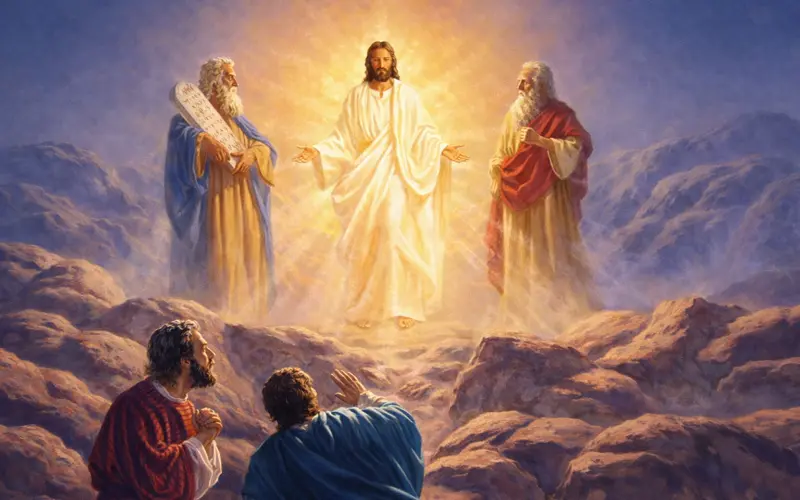
Theologically, this week the liturgy begins to shift toward the Transfiguration. The Church places this mystery deliberately in Lent’s second Sunday (Luke 9:28–36) — not as a distraction from the desert, but as a promise within it. Jesus shows His disciples His glory precisely so they can endure what is coming. The message is direct: stay the course, because what waits at the end of this journey is beyond what you can imagine from where you stand now.
This year, Lent 2026 runs from Ash Wednesday, February 18 through Holy Saturday, April 4. We are now in the heart of the journey’s opening movement.
What the Second Week of Lent Means for Catholics Today
This is the week the desert becomes real. The novelty is gone. What remains is a choice — made quietly, without fanfare — to keep going.
The second week confronts us with three specific spiritual realities that the first week’s enthusiasm can mask: resistance, discouragement, and distraction. These aren’t signs of failure. They are the actual material of Lenten conversion. What we do with them this week shapes everything that follows.
The Transfiguration reminds us that God does not hide His face forever. But He asks us to climb the mountain first — in the ordinary, unglamorous effort of daily fidelity. The light comes — but not before the climb.
Practical Ways to Live This Second Week Well
- Don’t restart. Simply continue. If you broke your fast or missed your prayer, don’t treat it as a failure that requires beginning again. Just continue from where you are, today.
- Sit with Sunday’s Gospel (Luke 9:28–36). Ask yourself: where in your life are you being asked to trust what you cannot yet see?
- Make your fast more interior this week. Beyond food, fast from complaint, from scrolling, from the words that come too quickly and cut too deep.
- Pray for someone who has lost hope. The second week is a good time to turn your Lenten prayer outward — toward someone in your life who is struggling.
- Go to Confession if you haven’t yet. The second week is still early enough that a sincere Confession can reshape your entire Lent.
- Read one Psalm slowly. Psalm 27 — “The Lord is my light and my salvation” — is the Lenten psalm the Church returns to every year. Read it once, slowly, out loud.
- Name what is resisting in you. Not to judge it, but to bring it into the light. What specifically is making this hard? That resistance is your Lenten work.
Scripture to Carry This Week
“The Lord is my light and my salvation — whom shall I fear?” — Psalm 27:1
“And as he was praying, the appearance of his face changed, and his clothes became as bright as a flash of lightning.” — Luke 9:29
A Short Prayer for the Second Week of Lent
Lord,
The desert feels more real this week than it did at the beginning.
The ashes have faded. The enthusiasm is quieter now.
I have not done this perfectly.
I lose focus.
I struggle to remain faithful.
Yet I return to You.
Receive this small return of my heart.
Take what is fragile in me and make it faithful.
Give me the grace to remain —
even when I do not see clearly,
even when I feel little.
Increase my faith.
Keep me steady.
Lead me, step by step,
through this desert toward Your light.
Amen.
Lent is a spiritual journey that gradually leads us toward the sacred days of Holy Week — when the Church remembers the Passion, death, and Resurrection of Christ.
👉 See our Holy Week 2026 Complete Guide to understand each day from Palm Sunday to Easter.